Dental implant treatment is a surgical procedure, so accuracy is vital from the very beginning. Before an implant is placed, a dentist needs to understand the available bone, the location of nearby anatomical structures, including nerves, and how the planned implant will relate to the final replacement tooth. A regular dental X-ray can provide valuable information, but it produces a flat picture of a 3D structure. When appropriate, 3D imaging such as a cone beam computed tomography (CBCT) scan can provide a much more detailed view of the jaw.
At Peter Brash Dental Care, advanced scanning technology, including 3D CT scanning, is part of how they handle complex implant planning. The purpose is to support detailed treatment planning; rather, it is about giving the dental team more information before treatment begins, allowing implant placement to be planned around the patient’s unique jaw structure. For anyone searching for “dental implants near me”, this is an important question to ask: not simply whether a practice provides implants, but how precisely they plan the treatment.
Why Two-Dimensional Images Have Limitations
Conventional dental X-rays are still relevant, but they flatten out 3D features into a two-dimensional image. This means that structures can overlap on the image, making parts of your jaw more difficult to assess.
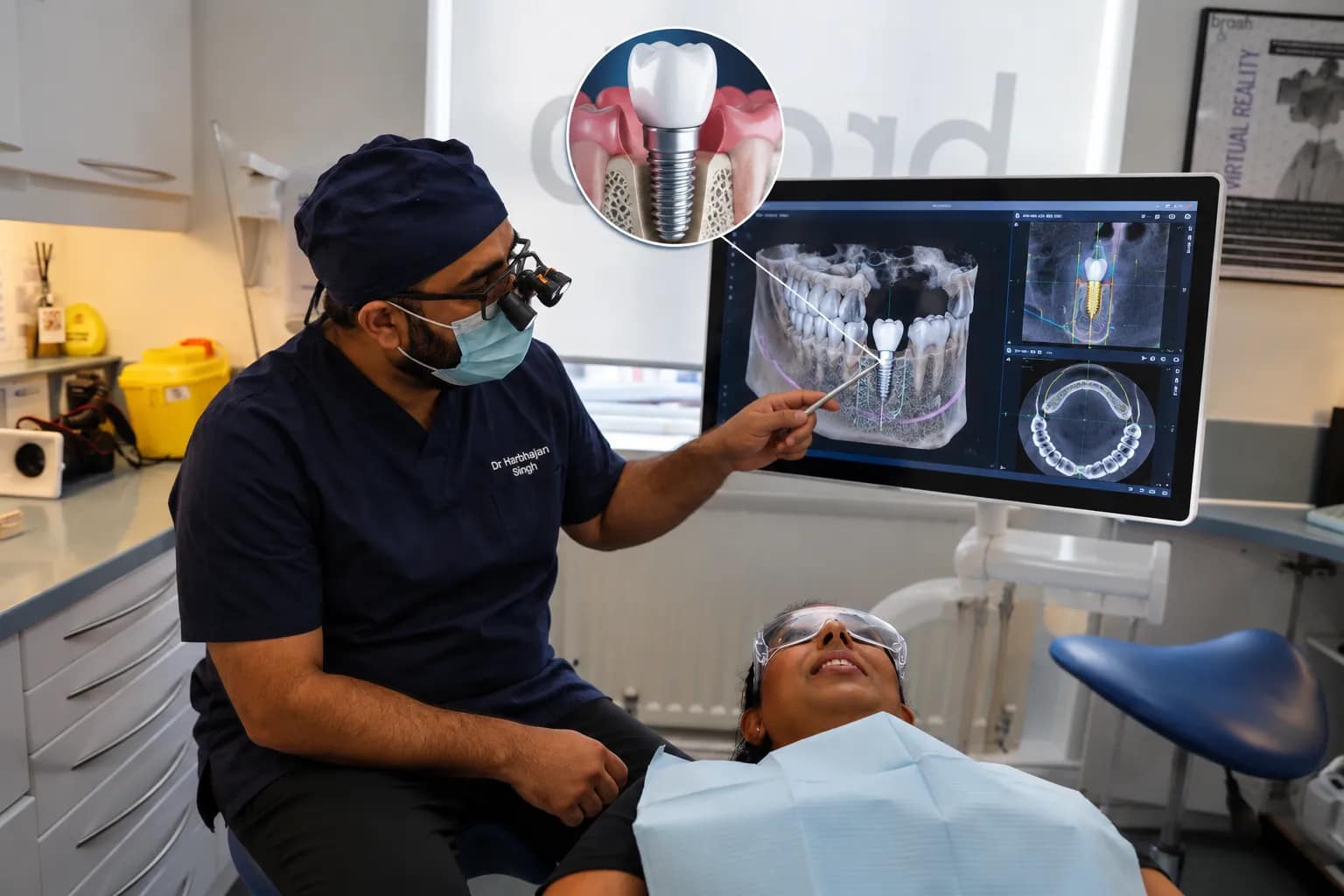
A CBCT scan, on the other hand, creates 3D images of the teeth and jaw. NHS guidance explains that this type of imaging can show the precise shape and structure of the jawbone and reveal details missed by conventional X-rays alone. Imaging is selected according to the specific situation, with the benefits weighed against radiation exposure. When a 3D scan is right for you, it can give specialists extra detail for treatment planning.
Assessing the Bone Before Placing an Implant
An implant needs a solid base in the jawbone. After a patient loses a tooth, the bone in that area can change, and the bone volume and shape are also affected. Three-dimensional imaging allows the dental team to examine the bone in full detail before mapping out the placement. CBCT can provide information about the amount of bone as well as structures such as nearby tooth roots, nerves, the nasal cavity, and sinuses.
This information plays a crucial role in the overall treatment plan. If there is not enough bone for a simple implant procedure, additional procedures, such as bone grafting, can be considered during planning, rather than the problem being discovered during surgery.
Identifying Important Anatomical Structures
The jaw contains anatomical structures that clinicians need to identify and account for when planning implant surgery, including nerves and the roots of neighbouring teeth. A 3D scan allows these structures to be assessed in relation to the proposed implant site. This is especially crucial in areas where the space is tight or where important anatomical structures are close to the proposed treatment area.
The benefit is simple: the better the team knows the layout before surgery, the safer the plan. CBCT is a method for assessing bone quality and quantity before implant placement, and it helps in spotting any hidden risks.
From a Scan to a Treatment Plan
The value of 3D scans lies in how the information is used. A scan alone isn’t a full plan. The scan needs to be assessed alongside the clinical examination, the patient’s overall dental health, the available bone, the bite, the intended appearance, and the planned position of the final crown.
Here, the implant process includes a first consultation and may involve X-rays or 3D imaging to check the health and strength of the jawbone. The practice also uses guided implant placement as part of its tech-driven approach.
This planning allows the proposed implant position to be considered before the surgical procedure rather than relying solely on what is visible during surgery.
Can Better Planning Make Implant Surgery Less Invasive?
It definitely can. Better information can allow the clinician to plan the surgical approach more precisely and skip extra steps where clinically appropriate. The team here uses technology to make treatments smooth and precise, with the aim of cutting down on pain and speeding up healing.
However, healing depends on a lot more than just a scan. The complexity of the procedure, whether bone grafting is required, the patient’s general health, oral hygiene habits, and individual healing response can all affect recovery. For that reason, 3D imaging should be viewed as an important planning tool rather than a promise of a fast recovery.
Precision Can Also Affect the Final Result
Implant treatment involves more than placing a metal post in the jaw. The implant needs to be positioned to support a new tooth within the patient’s anatomy.
The planned position can therefore have an effect on chewing function and the appearance of the final restoration. The implant needs to provide a solid base for your crown or bridge while fitting appropriately alongside neighbouring teeth. A precise implant service handles both the surgical post and the final crown, allowing implant placement and the final restoration to be planned as one coordinated course of treatment.
Technology Does Not Replace Clinical Expertise
Advanced imaging is only useful when it is interpreted and applied correctly. When a specialist periodontist and implantologist, trained in periodontology and experienced in complex planning and placement, supports implant treatment, excellent results become more achievable.
This combination matters. A detailed scan provides information; clinical expertise determines what that information means for an individual patient.
It is also why patients should be wary of viewing a particular piece of technology as a guarantee of success. Dental implants still involve surgery and carry potential complications, and suitability depends on factors including oral health, bone availability, smoking, and long-term maintenance.
Precision Before the Procedure
Modern implant treatment emphasises planning before surgery begins. 3D imaging can provide a detailed view of the patient’s anatomy, helping experts check the bone and spot hidden nerves that may be missed on a flat X-ray.
At Peter Brash Dental Care, this technology is part of the big-picture approach that combines advanced imaging, specialist implant expertise, and precision-guided treatment. The goal is simple: base decisions on your actual mouth, not guesswork.
For patients searching for ‘dental implants in Gerrards Cross’, that difference can be significant. The technology does not erase all risks, and it does not promise a flawless result. What it can do is give experts detailed information to help them plan the procedure safely, which is a key part of modern, patient-first care.
Patients can also explore dental implants near Slough for specialist implant care nearby.